

Table of Contents
In the vast universe of footwear, dominated by high-tech athletic brands and luxury fashion statements, there exists a quiet, unassuming icon: the plimsoll. More than just a simple shoe, the plimsoll is the foundational blueprint for the modern sneaker, a testament to timeless design born from pure practicality. Its story is not of celebrity endorsements, but of classroom gyms, coastal walks, and enduring style.
A Name from the High Seas
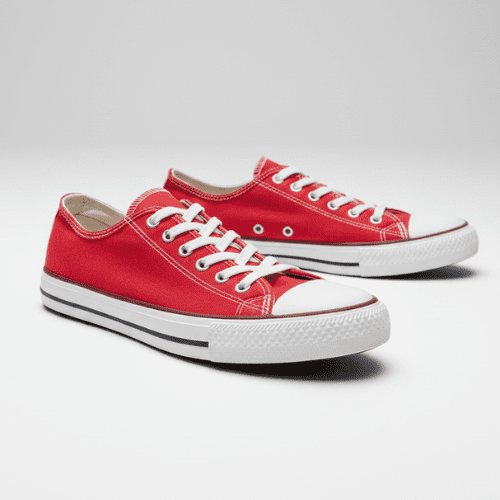
The plimsoll’s unique name is the first hint of its clever design. Emerging in the 19th century, the shoe’s key innovation was the vulcanised rubber sole bonded to a canvas upper. Running around the shoe where these two materials met was a thin, coloured line—often red or blue. This line bore a striking resemblance to the Plimsoll Line painted on ship hulls to mark the safe load limit. The analogy was perfect: just as water over the ship’s line meant danger, water over the shoe’s line meant wet feet. The functional name, primarily used in Britain, stuck.
From School Gymnasiums to Everyday Wear
The plimsoll’s rise was built on utility and accessibility. Its lightweight, flexible, and affordable construction made it the ideal choice for the growing physical education movement. For generations of British schoolchildren, “plimsolls” were synonymous with “gym shoes,” donned for everything from indoor sports to playground games. This embedded the shoe with an aura of youthful simplicity and unpretentious activity.
While the British had their plimsolls, the same fundamental design was taking root globally under different names. In America, brands like Keds marketed their versions as “sneakers” for their quiet rubber soles. The classic French espadrille, with its rope sole, shared a close kinship. The plimsoll was, in essence, the prototype from which a global category of casual footwear evolved.
Anatomy of a Classic
The beauty of the plimsoll lies in its minimalist, functional anatomy:
Canvas Upper: Lightweight, breathable, and softly moulding to the foot.
Vulcanised Rubber Sole: Offering simple grip and flexibility over excessive cushioning.
The Signature Line: The defining trim that gives the shoe its name and crisp silhouette.
Unlined Interior: Contributing to a barefoot, lightweight feel.
This lack of ornamentation is its greatest strength. The plimsoll presents itself as a blank canvas, both literally and stylistically, ready to adapt to the wearer.
A Subtle Cultural Footprint
Despite its simplicity, the plimsoll has left a deep imprint on culture. It became a symbol of understated cool and counter-cultural movements. From 1960s Mods in the UK who contrasted them with sharp suits, to artists and musicians valuing their effortless vibe, the plimsoll stood for authenticity over showmanship. In Japan, a reverence for vintage workwear led to a high-craft revival of the plimsoll, with brands elevating its construction to an art form.
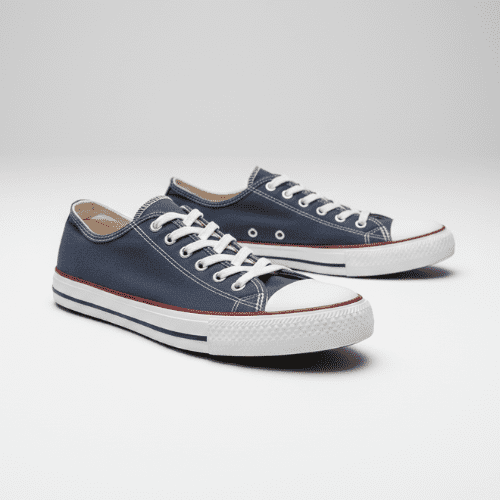
Today, the plimsoll’s DNA is everywhere. It is the direct ancestor of the Converse Chuck Taylor and the Vans Authentic. Every minimalist canvas sneaker on the market owes a debt to its original blueprint. Its influence proves that a design rooted in purpose possesses a timeless versatility that fashion cycles cannot erase.
A Modern Revival and Sustainable Ethos
In recent years, the plimsoll has experienced a significant revival, driven by a growing desire for simplicity and sustainable fashion. In a market saturated with complex, resource-intensive footwear, the plimsoll’s straightforward construction is increasingly seen as a virtue. Modern iterations often use organic cotton, recycled rubber, and low-impact dyes, aligning its inherent simplicity with contemporary eco-conscious values. This resonates with consumers seeking durable, versatile staples over fast-fashion trends. The shoe’s very lack of technical gimmicks means it is often repairable, encouraging a longer lifespan—a principle that feels profoundly modern.
The Enduring Appeal
In our era of complex trainers, the plimsoll’s appeal is a refreshing constant. It offers a pure, clean aesthetic that pairs effortlessly with almost any casual outfit—from denim and shorts to summer dresses and tailored trousers. It speaks of a confident ease, a choice that values comfort and style without shouting for attention. Its legacy is a powerful reminder that the most impactful designs are often those that solve a basic problem with elegance and efficiency.
Ultimately, the plimsoll is more than footwear; it is a design philosophy. It demonstrates that when form follows function with clarity and intelligence, the result can achieve a quiet perfection. It is the unsung hero in our wardrobes, a humble reminder that the most foundational items often carry the richest history. So, next time you see that simple canvas shoe with the coloured trim, remember: you’re looking at the modest origin of a global phenomenon, a shoe that has quietly stepped from the Victorian era onto the modern street, proving that true style is, fundamentally, well-grounded.